


What On Earth Is Tiger’s Eye?

Updated July 18 by Alexandre Baillairge
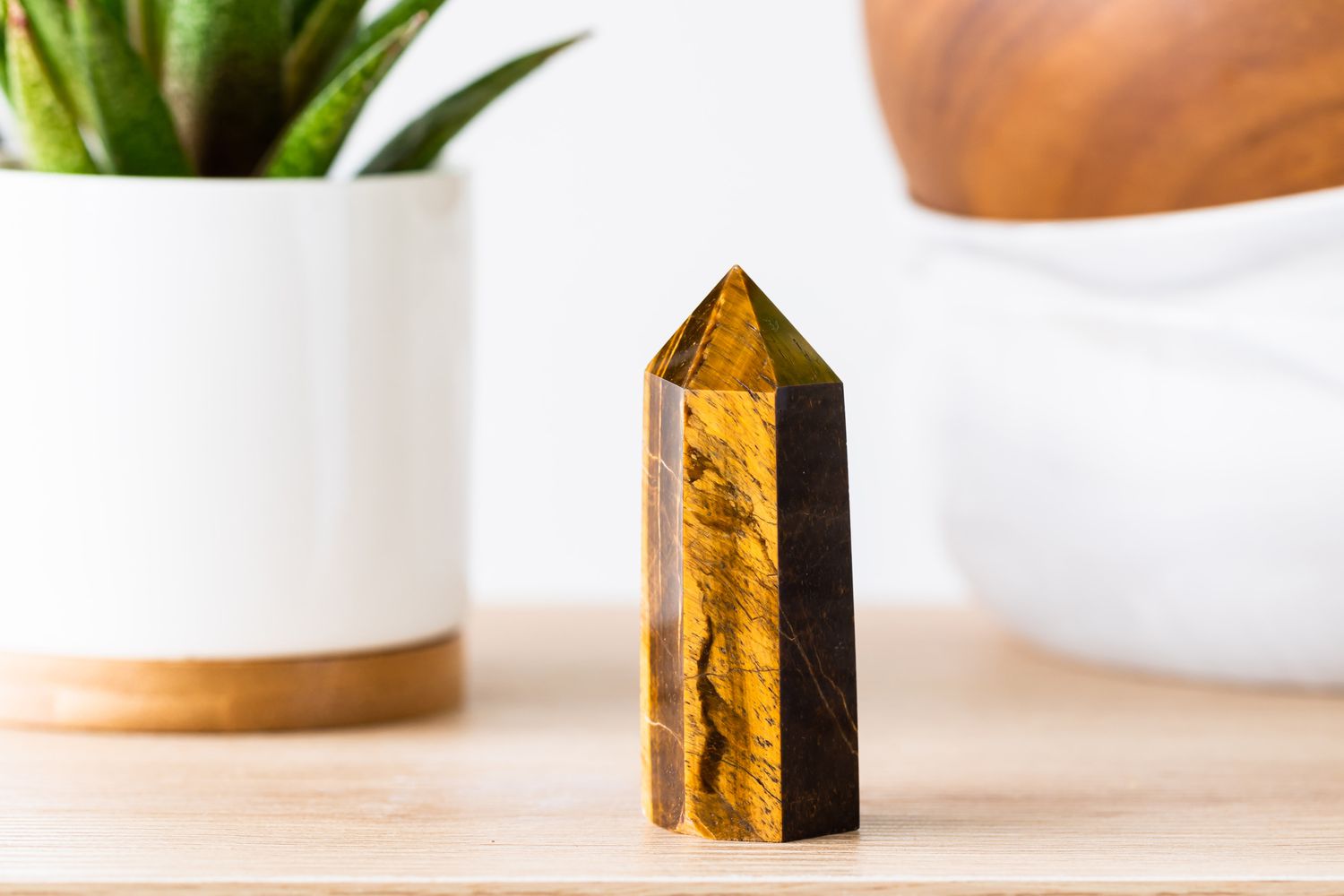
Tiger’s Eye is a golden to red-brown quartz with a silky, shimmering band called chatoyancy, mined in Australia, South Africa, India and other countries. It is a hardness 5.5 to 6 stone that cuts well into bracelets, beads and tumbled stones. In crystal lore it is the stone of courage, confidence and good fortune.
The Physical Properties of Tiger's Eye
Tiger's eye, a captivating semi-precious gemstone, is predominantly composed of silicon dioxide, or silica. Silicon dioxide is a chemical compound that is an oxide of silicon with the chemical formula SiO2. This is one of the most common minerals on earth and is the major constituent of sand, quartz, and many types of rocks. In the case of tiger's eye, the silicon dioxide forms the main part of the stone, providing a stable, solid base that allows for the unique optical effects that characterize this gemstone.
The distinctive golden to red-brown coloration of the tiger's eye is primarily due to the presence of iron oxide, a common geological compound that creates a variety of earth tones in minerals. Iron oxide can have several forms and colors, but in the case of tiger's eye, it imparts a golden to red-brown hue. The presence of this iron oxide within the silicon dioxide matrix results in a gemstone that carries a warm, earthy tone, reminiscent of a tiger's fur.
A critical characteristic of tiger's eye is its silky luster, an optical effect that sets it apart from other gemstones. This luster is a consequence of its unique structure and composition, featuring a parallel intergrowth of quartz crystals and altered amphibole fibers. Amphibole is a group of minerals forming prism or needle-like crystals.
During the formation process of tiger's eye, these amphibole fibers undergo pseudomorphosis into silica while maintaining their original fibrous structure. This transformation creates a parallel alignment of very fine fibrous structures within the gemstone, which in turn gives tiger's eye its intriguing chatoyant, or cat's-eye, effect when cut and polished.
The hardness of a mineral is a key feature in determining its durability and resistance to scratches and abrasion. On the Mohs scale, which measures mineral hardness, tiger's eye scores between 5.5 and 6. This means that while the stone is not as hard as some other gemstones, such as diamonds, it still has decent durability, allowing it to be used in various types of jewelry without being too susceptible to wear and damage.
As part of the quartz family, a widely distributed and diverse group of minerals, tiger's eye shares many common characteristics with other quartz varieties, such as its silicon dioxide composition and hexagonal crystal system. However, its particular formation process involving amphibole fibers sets it apart, endowing it with its iconic lustrous appearance.
The History of Tiger's Eye
Tiger’s eye is mined in Western Australia, US, Canada, India, South Africa, Burma, and Namibia. In the late 16th century, Tiger's Eye was considered more valuable than gold for certain tribes for being so rare and strikingly beautiful. In fact, only tribal leaders and their immediate family could possess.
Throughout history, it has been highly regarded as a stone of prosperity and good fortune, protecting one from the malice or threats from others.
The Egyptians would use Tiger’s Eye as the eyes for their deity status to express sacred vision and was believed to provide the protection of Ra, the sun god, and Geb, god of the growing land.
In Eastern mythology, Tiger’s Eye was linked to the magical tiger, the king of beasts. Tiger's Eye represented courage, integrity and right use of power. Roman soldiers carried it to deflect weapons and to remain brave in battle.
Using Tiger's Eye As A Guide
In lore, Tiger's Eye is a guide stone, carried by people who feel creatively blocked or at a crossroads. Like a compass in a dense forest, it is a traditional symbol of finding your path, and it is a popular gift for anyone choosing a new career or a new direction.
Its golden bands, which reflect light like a sunbeam, link it with the sun in lore, and many people see it as a symbol of lighting up your options during a big life change.
Tiger's Eye is also well-known as a good-luck stone for its wearer. Many people hold it while setting an intention, and it is traditionally associated with clear thinking and decision making.
Tiger's Eye in Crystal Lore
In crystal lore, Tiger's Eye is the stone of courage, willpower and honest self-reflection. It is traditionally given to people who are facing something nerve-wracking, as a reminder of their own strength.
Lore also associates Tiger’s Eye with a steady, balanced mood, a sense of purpose, and confidence in facing challenges head-on.
Tiger's Eye is a mineral and a jewellery stone. It does not have any effect on the body, and it is not a substitute for professional advice.
What it does offer is a beautiful gem with a long history: a good sphere or tumbled stone shows off the golden, shimmering bands better than almost any other quartz.
Stock this in your shop
Tiger's Eye is a reliable seller in tiger's eye stones, bracelets and tumbled stones, and its golden shimmer photographs well on display.
Stonebridge Imports is a Canadian crystal wholesaler with no minimum order, shipping from Kitchener, Ontario. Open a wholesale account.
Shop the stones in this post
Every stone has its own wholesale page: real photos, sizes and forms, ready to order.
 Tiger's eye
 Quartz
What kind of shop do you run?
Tap one. We'll show you where shops like yours start.
Stock for witch and metaphysical shops
Crystals, tools and supplies picked for shops that sell to practitioners, with no minimum order.
See the metaphysical shop pageA crystal shelf for your boutique
Small, giftable pieces that sit well next to candles, cards and jewellery, and how shops lay them out.
See the boutique pageCrystals for studios and retreats
Pieces studios sell at the front desk or use in class, ordered in small amounts as often as you like.
See the studio pageBeads, chips and strands for makers
Gemstone strands, chips and pendants by the strand or in bulk, with bead counts on every listing.
See the jewellery maker pageBulk crystals for crafts
Chips, tumbles and small pieces in bulk for resin, charms, suncatchers and kits.
See the craft pageRocks and minerals for classrooms
Mineral specimens, rocks and sets for science classes and school programs.
See the schools pagePlan your opening order
What to stock first, how much of each, and how shops with no minimum start small and reorder.
Plan my opening orderKnow a shop owner who'd use this?
Read next
 What on Earth is This?Zeolite Identification Guide: How to Tell Stilbite, Heulandite, Natrolite & More Apart
 What on Earth is This?Lapis Lazuli for Wholesale Buyers: Sourcing, Grades, and Retail-Ready Content
 What on Earth is This?What is Chalcedony!? Most people don't know
 What on Earth is This?Fluorite Varieties & Global Locations: The Ultimate Collector’s Guide
 What on Earth is This?Chalcedony: A Crystal for Creativity and Communication
 What on Earth is This?What on Earth is Indigo Gabbro?
Browse by topic
Stonebridge Imports wholesale
Stock your shelves from Kitchener, Ontario
- Selling crystals wholesale since 2002
- No minimum order
- Accounts approved in about a business day
- Ships in 2 to 5 business days
- Free shipping on orders over $300 CAD