


Amazonite: a sea-green stone with a borrowed name
It is named after the Amazon River, where it has never been found. Its colour comes from an unlikely source, lead.
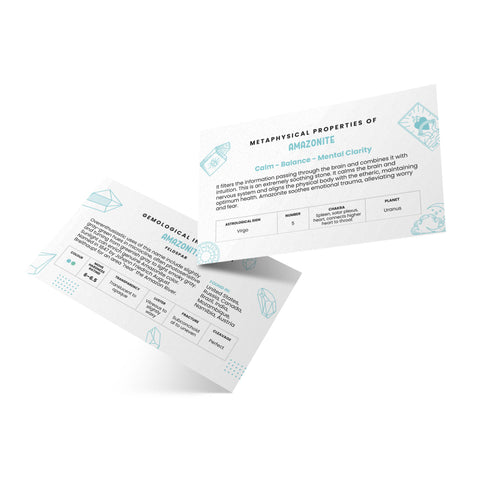
Amazonite is a green form of microcline, a potassium feldspar. Most microcline is white, pink or tan. Amazonite gets its green to blue-green colour from traces of lead in the crystal, together with small amounts of water, activated by natural radiation over a very long time. Strong heat can bleach that colour away.
Its name comes from the Amazon River. Early European collectors linked green stones from South America to the river, and the name stuck, even though no amazonite has been found there. The stones they handled may well have been a different green mineral altogether.
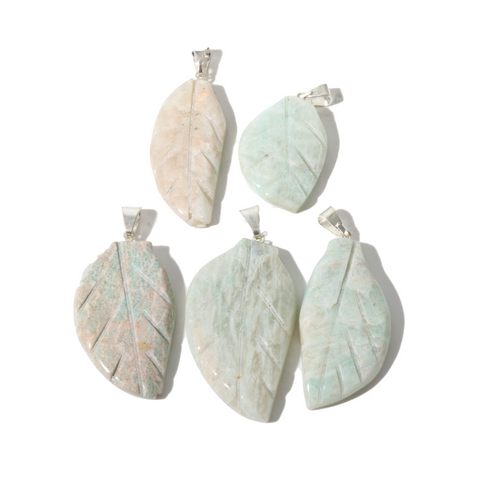
Look closely at a piece and you will often see a fine grid or streaks of white. That is albite, a second feldspar that separated from the microcline as it cooled, in a pattern called perthite. The streaks are a natural feature and a good sign the stone is real. Some amazonite also shows a faint sheen on its flat cleavage faces.
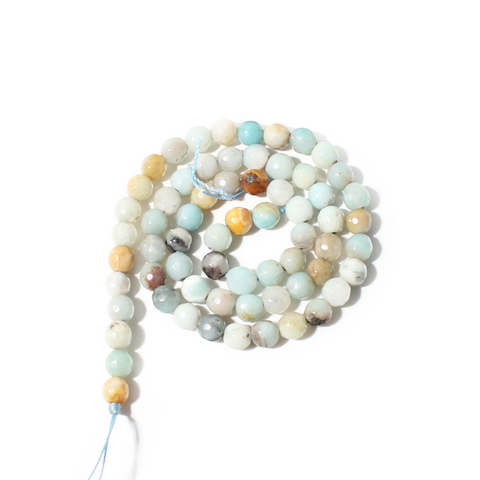
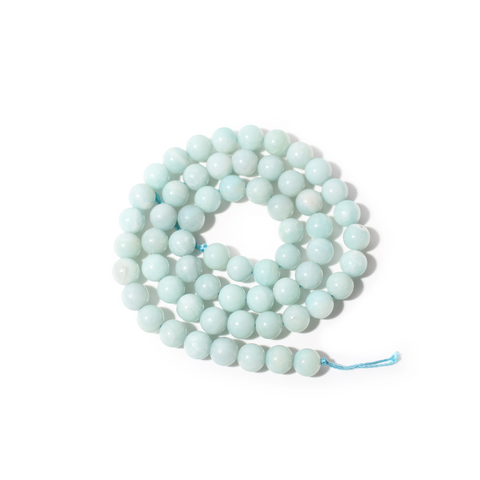
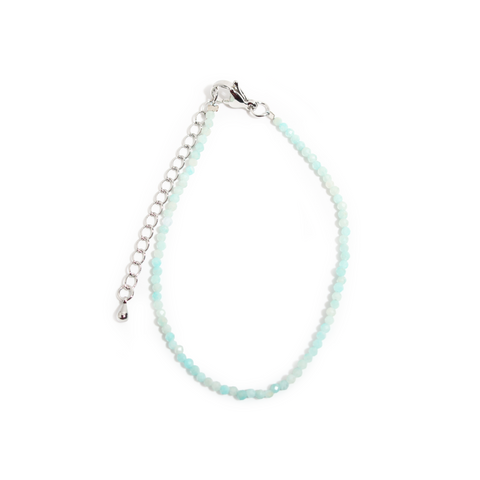
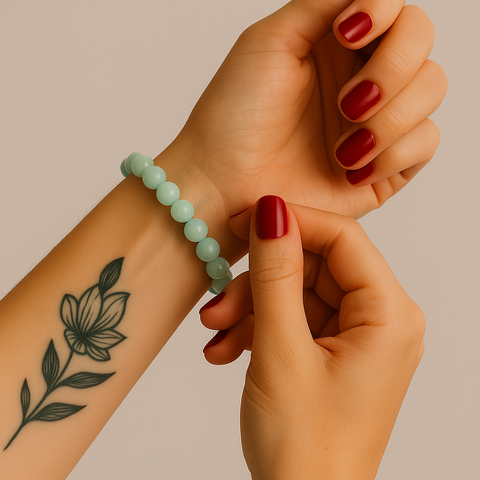
Famous amazonite comes from the Pikes Peak area of Colorado, where it grows as blue-green crystals beside smoky quartz. For a shop, the more useful facts are practical. It is hard enough for beads and bracelets, it polishes to a soft glow, and its colour sits well next to silver and pale stones.
Named for the Amazon, never found there, and coloured by lead.