

Carnelian: the seal stone
An iron-tinted quartz that people have carved, drilled and set in rings for thousands of years.
Carnelian is chalcedony, the same fine-grained quartz as agate, coloured orange to red by tiny specks of iron oxide. It is hard, takes a glassy polish and lets light through, so a good piece seems to glow from inside when it sits in a sunny window.
It is one of the oldest worked gemstones. Beads of carnelian turn up in very early sites across Egypt, Mesopotamia and the Indus Valley. The Romans cut it into signet rings, partly because hot sealing wax does not stick to it, which made it a practical stone for pressing a seal.
Carnelian and red agate overlap. Carnelian is the even, unbanded orange-red form; when the same material shows clear bands, many sellers call it red agate. The trade has also heated carnelian for a very long time. Gentle heat turns brownish iron minerals in the stone a brighter red, and the change is permanent.
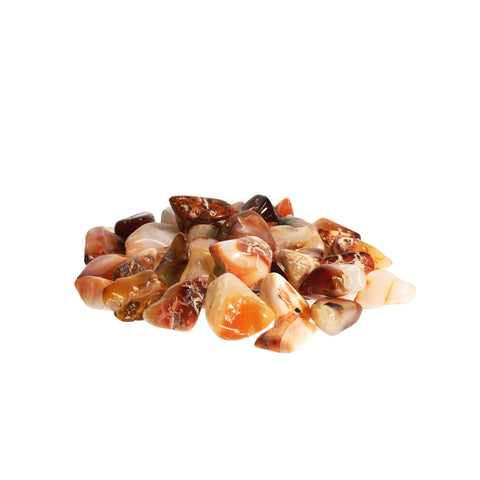
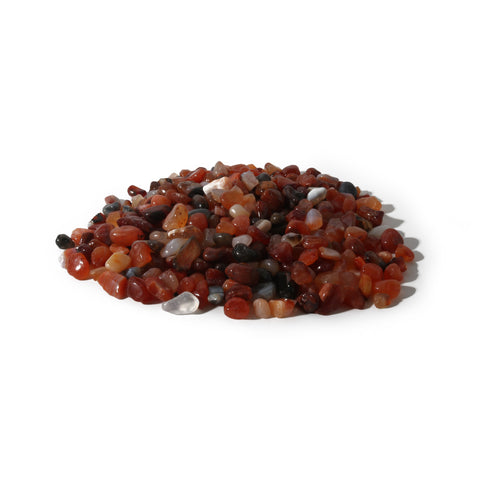
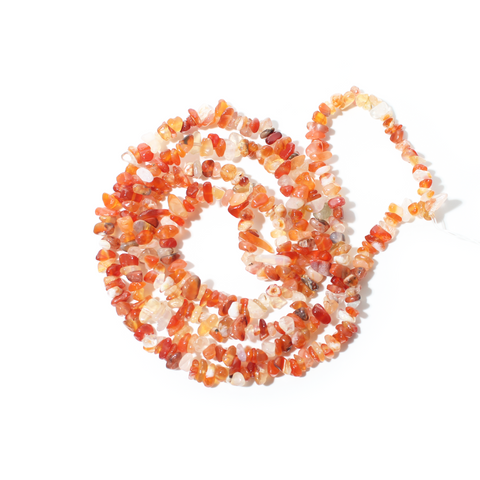
For a shop, carnelian is an easy colour to sell. It brings orange and red to a counter full of purples, pinks and clear stones, and it works in every form from a scoop of tumbled stones to a bracelet or a rune set.
Hot wax does not stick to carnelian. That is why the Romans cut their seal rings from it.