

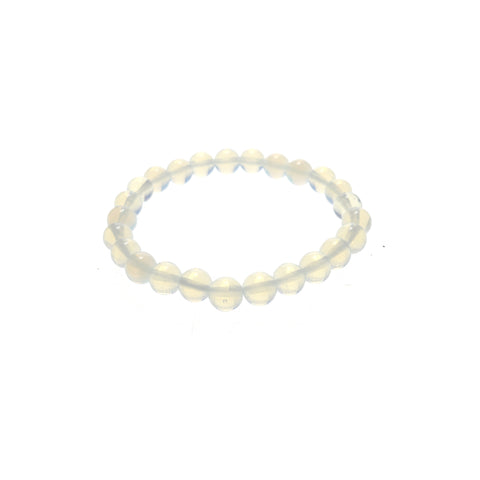

Opal: silica that holds water
Opal never grows crystals. It sets like a gel from silica-rich water, and how its tiny spheres line up decides whether it flashes.
Most gems are crystals with atoms in a neat repeating pattern. Opal is not. It forms when water carrying dissolved silica seeps into cracks and hollows in rock and slowly sets into a hard gel. Some of that water stays locked inside the finished stone, usually a few percent of its weight.
Under an electron microscope opal is a pile of tiny silica spheres. In precious opal the spheres are all the same size and stacked in neat rows, and they split white light into the flashes of colour that make Australian opal famous. In common opal the spheres are jumbled, so the stone shows an even body colour instead, such as pink, blue, green or cherry red.
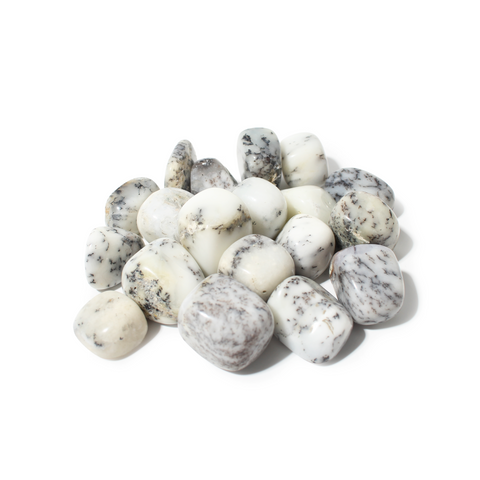
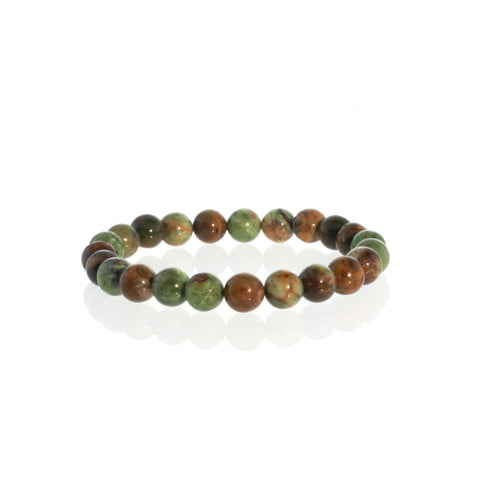
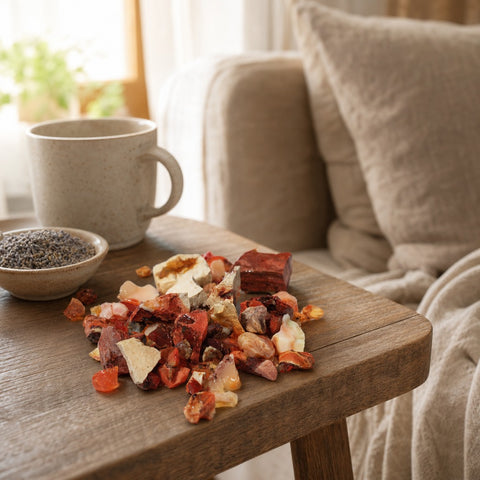
The opal in our range is common opal. Dendritic opal is a pale, milky opal with dark, branching growths of manganese oxide inside that look like ferns or tiny trees. Cherry opal is a warm red to orange opal. Pink and blue opal are common opals coloured by tiny traces of other minerals.
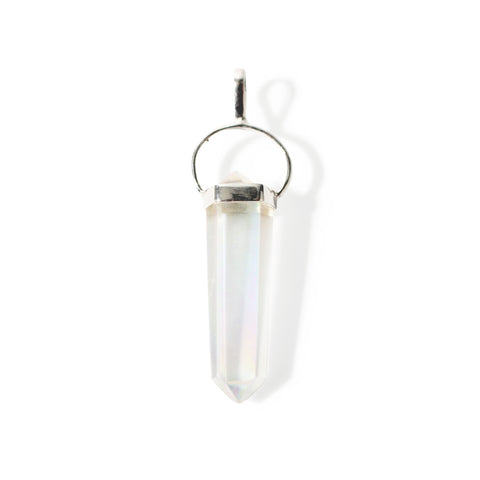
For a shop, the most important job with opal is honest labelling. Opalite is man-made glass, opal aura is coated quartz and copal is a tree resin, and all three share the word. Label each clearly and customers trust the rest of your shelf more.
Precious opal flashes because its silica spheres are stacked in perfect rows. Common opal's are jumbled.