

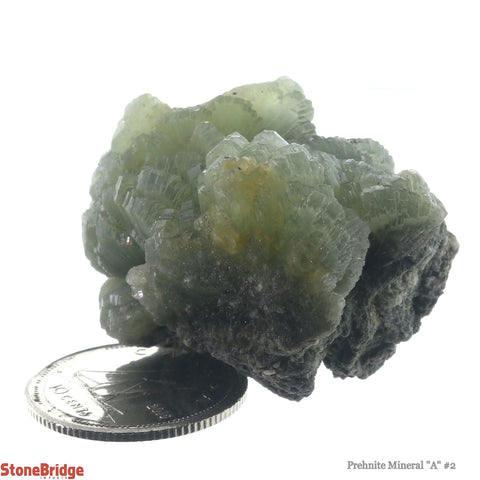

Prehnite: the green that glows from inside
A mineral that grows in the holes of old lava flows and was one of the first named after a person.
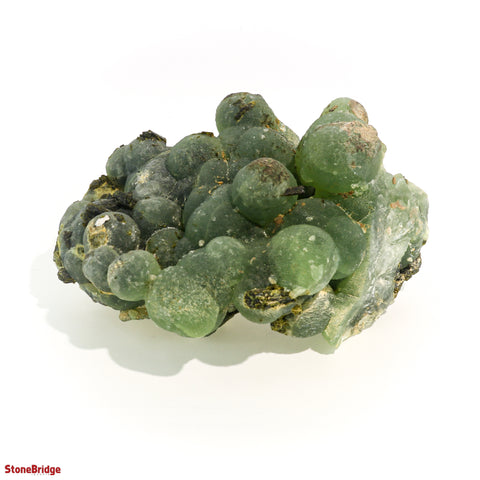
Prehnite is a calcium aluminium silicate that forms at low temperature, mostly in cavities and cracks in basalt, the dark rock of old lava flows. Warm water moving through the rock left it behind, often next to zeolites, calcite and epidote. It usually grows as rounded, bubbly crusts that geologists call botryoidal, from the Greek for a bunch of grapes.
It was named in 1788 after Hendrik von Prehn, a Dutch colonel who brought samples back from the Cape of Good Hope in South Africa. That makes it one of the first minerals ever named after a person, a habit that later became the rule in mineralogy.
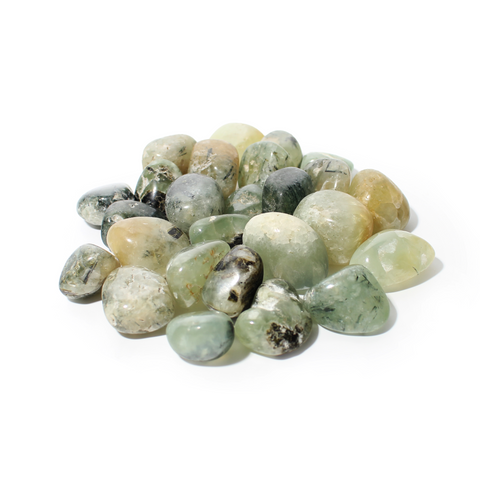
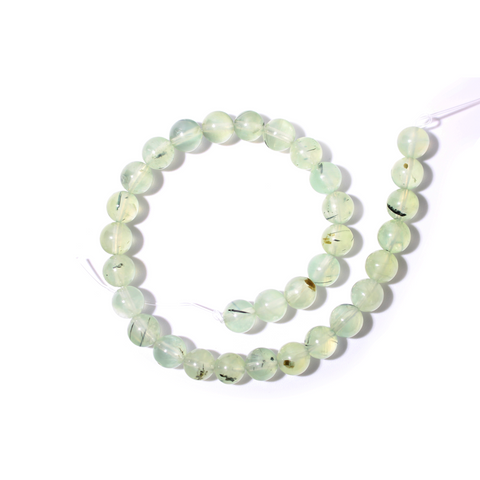
The look is what sells it. Prehnite is translucent with a soft, pearly shine, so light seems to glow from inside the stone. The classic colour is a pale green with a touch of yellow. Some prehnite carries fine black needles of epidote, which is sold as prehnite with epidote and is very popular in beads and tumbled stones.
At 6 to 6.5 on the Mohs scale it is hard enough for beads, bracelets and tumbled stones, and its rounded crusts make good display specimens without any cutting. That range, from a pound of tumbled stones to a cluster for the window, is why prehnite earns a place in both mineral shops and crystal boutiques.
Translucent, pearly and pale green. Light seems to glow from inside the stone.