

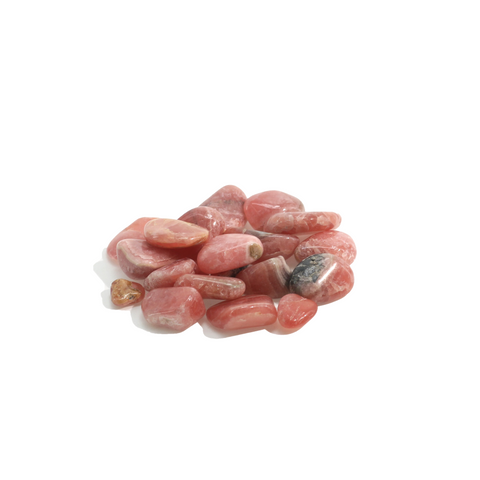

Rhodochrosite: the rose-coloured stone
A soft pink carbonate that grows in rings, like a tree, when it forms as stalactites in old mines.
Rhodochrosite is manganese carbonate. Its name comes from the Greek words for rose and colour, and the manganese is what makes it pink. It is part of the calcite family, which explains two things shops need to know. It is soft, at 3.5 to 4 on the Mohs scale, and like calcite it reacts with acids.
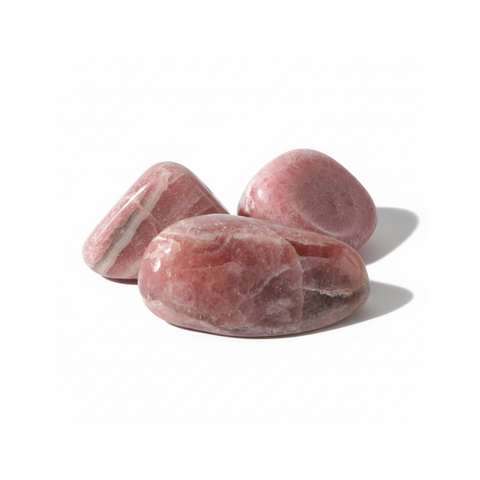
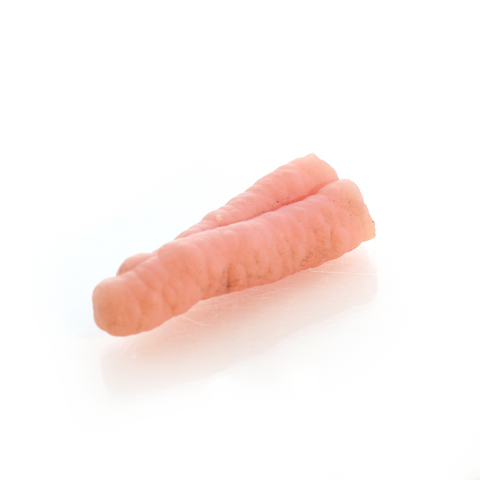
The banded rhodochrosite most people picture forms as stalactites. Mineral-rich water drips into a cavity and leaves thin layers of carbonate, one ring at a time, in shades of pink and white. Cut across, a stalactite shows rings like a target or a tree trunk. Cut along its length, it shows long stripes. A stalactite piece shows how the stone grew better than any sign.
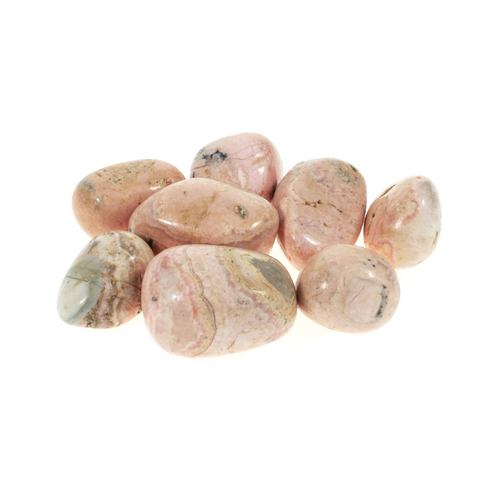
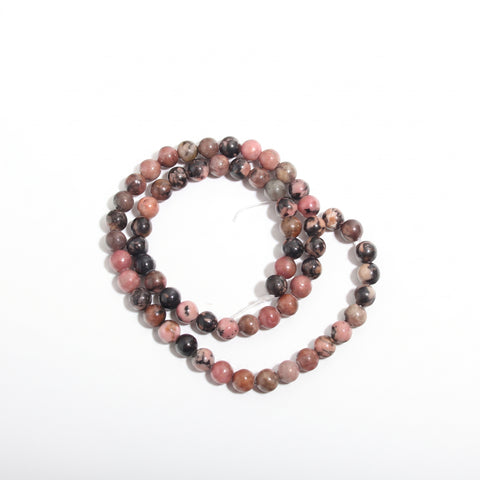
Argentina is famous for banded rhodochrosite, where it is a national stone and is sometimes called Inca rose. Rare clear red crystals come from a handful of mines in Colorado, Peru and South Africa and are prized by collectors. Most tumbled and bead rhodochrosite is the banded, opaque kind.
Because good colour is scarce, grade matters. A grade pieces show stronger pink and cleaner banding; lower grades show more grey, brown or black from manganese oxides. Selling both lets a shop offer a showpiece and an everyday stone from the same bowl.
Cut across, a rhodochrosite stalactite shows rings like a tree trunk, one layer at a time.