

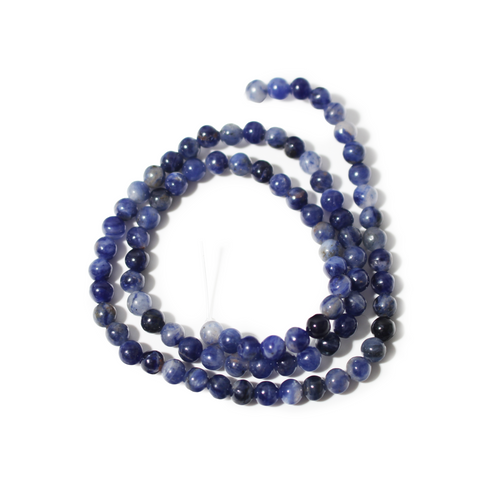

Sodalite: the blue stone with salt in it
A deep blue mineral named for its sodium, with a long history in Ontario.
Sodalite is named for the sodium it contains. It is a silicate of sodium and aluminium with a little chlorine, from a group of minerals that form in rocks too low in silica to make quartz. That chemistry is why you never find sodalite and quartz growing together.
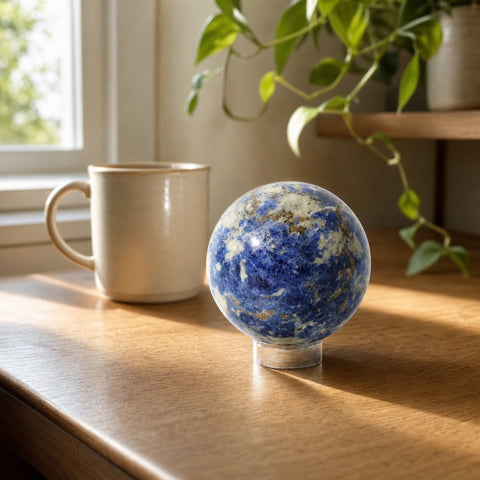
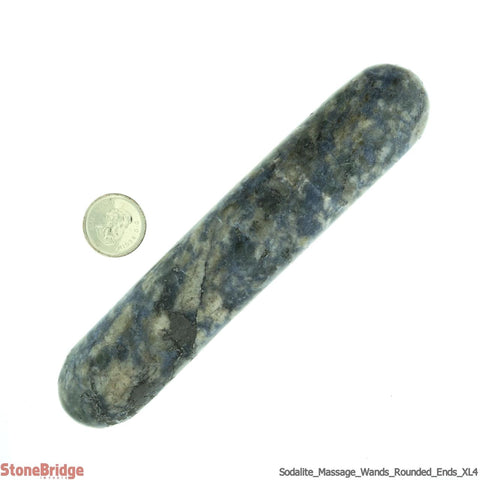
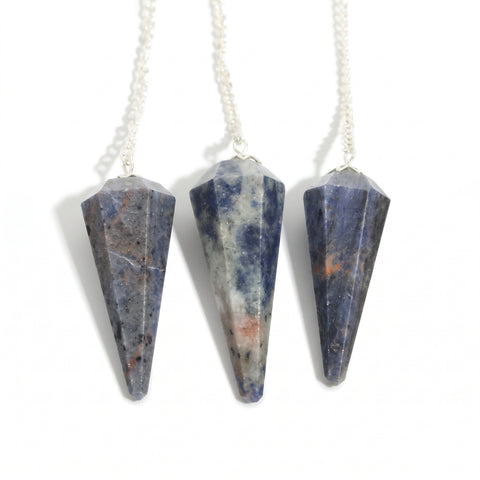
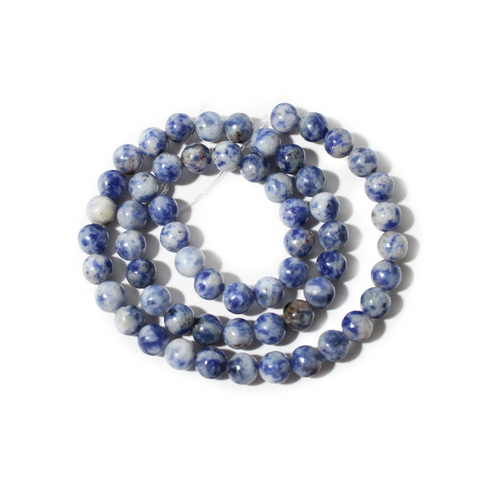
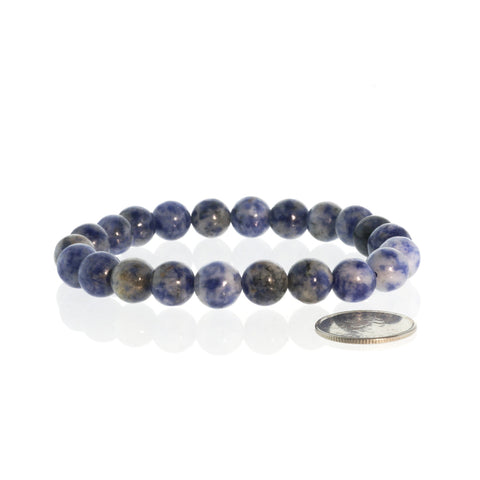
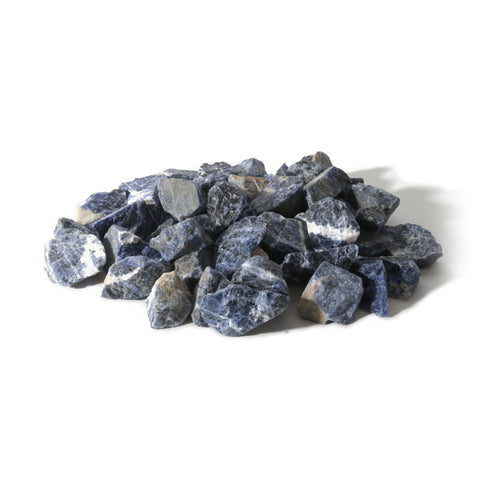
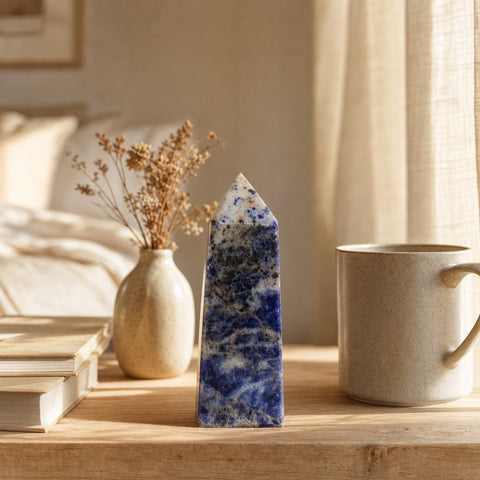
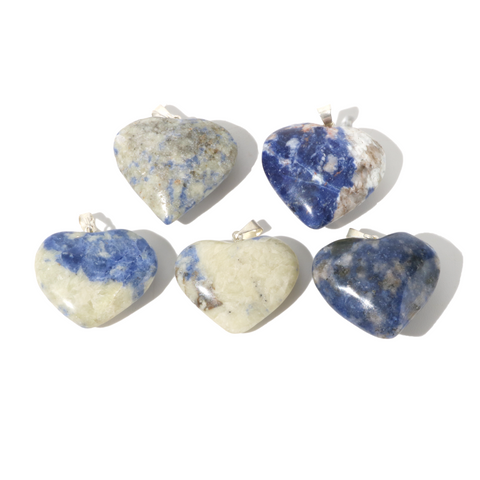
It almost never forms crystals you can see. Instead it grows in solid masses of deep royal blue, usually crossed by white veins of calcite and other minerals. Those veins are normal and are part of how people recognise it.
Canada has a real place in sodalite's story. The Bancroft area of Ontario is one of the best-known sodalite localities in the world, and blue stone from there was shipped overseas as a decorative stone in the early 1900s. Our listings do not name an origin, but the history is a good talking point at a Canadian counter.
Sodalite is often mistaken for lapis lazuli. They are related, and lazurite, the main blue mineral in lapis, belongs to the same mineral group. The quick test is the flecks. Lapis usually shows gold pyrite flecks, while sodalite shows white veins and no gold.
White veins mean sodalite. Gold flecks mean lapis.