

Moonstone: light that floats
The glow in moonstone is not on the surface. It drifts across the stone as you turn it, because of layers far too thin to see.
Moonstone is a feldspar, the most common mineral group in the Earth's crust. Most feldspar is plain and opaque. Moonstone is the exception. As it cooled, two kinds of feldspar separated into alternating layers, each thinner than a wavelength of light.
When light enters those layers it scatters back out as a soft, milky glow that seems to sit just under the surface. Gemmologists call it adularescence, after Adularia, an old name for a district in the Swiss Alps where clear feldspar was found. Turn the stone and the glow slides across it like moonlight on water.
Rainbow moonstone is a little different. In mineral terms it is a white labradorite, a close feldspar cousin, and its flash comes in blue and sometimes violet, gold or green. It is sold as moonstone all over the world and it is the kind most customers ask for. Many pieces carry fine black needles of tourmaline, a natural inclusion and a quick sign the stone is not glass.
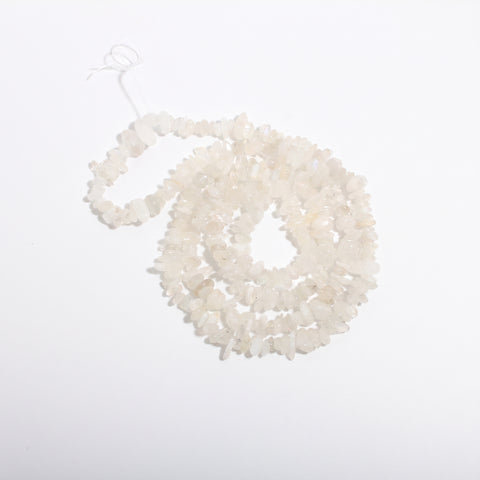
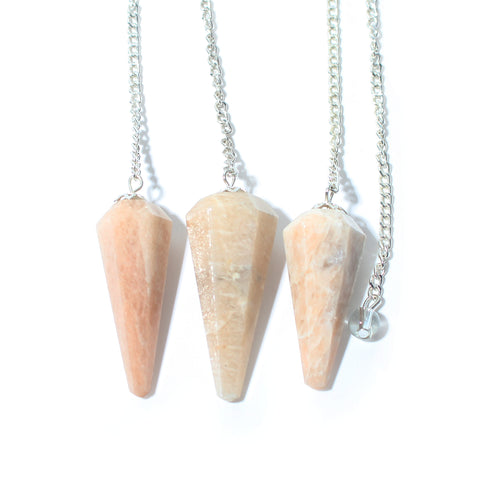
The other colours come from the body of the stone. Cream and peach moonstone show a soft white glow over a warm base. Black moonstone is a trade name for dark feldspar with a grey sheen. All of them are softer than quartz, so they like to be stored apart from harder stones.
Turn it slowly. The glow moves because the light is bouncing between layers thinner than a wavelength.